DXB --:--
category

Sci-Tech

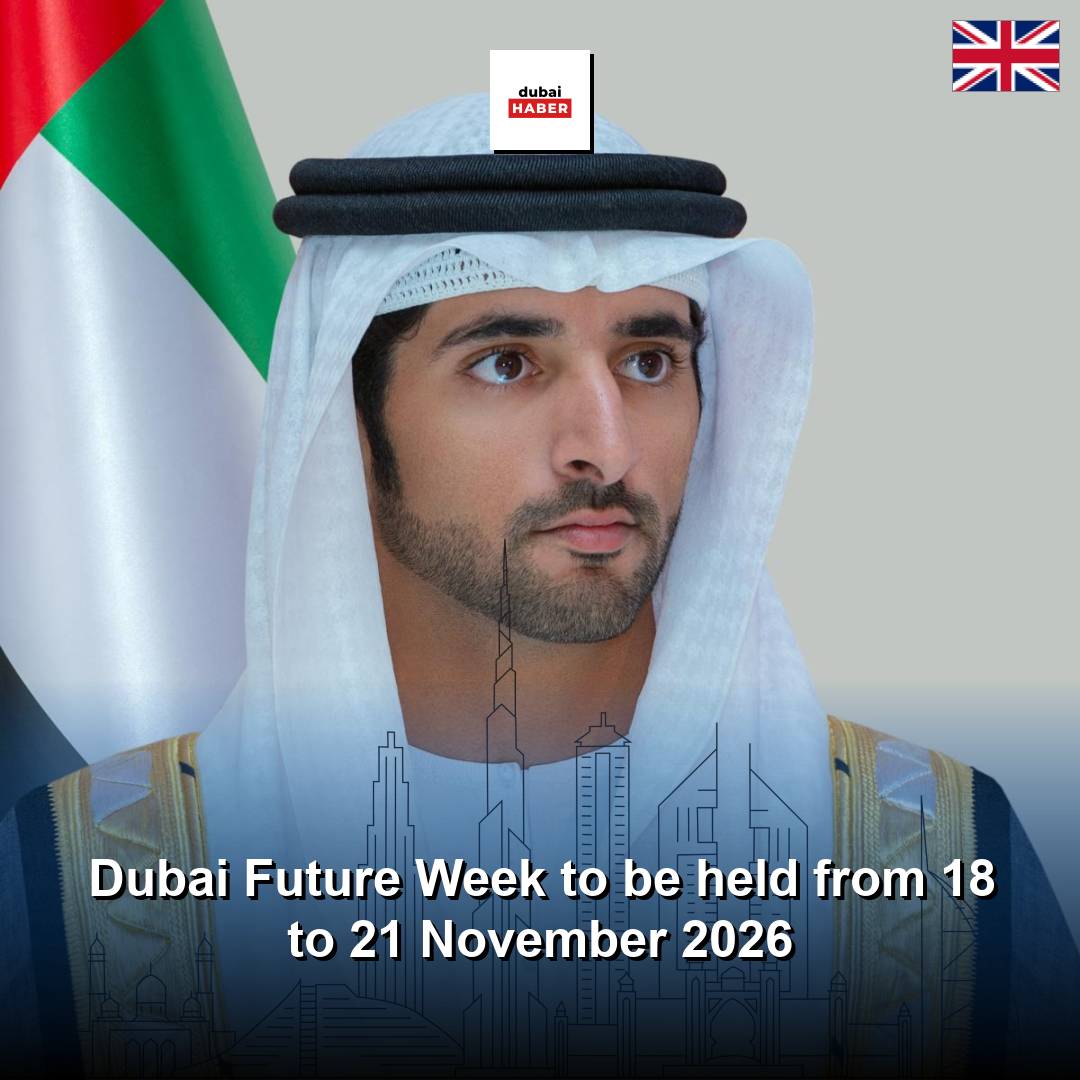
Dubai Future Week to be held from 18 to 21 November 2026
01.09.2026

Dubai Future Week to be held from 18 to 21 November 2026

DUBAI, 1st September, 2026 (WAM) -- H.H. Sheikh Hamdan bin Mohammed bin Rashid Al Maktoum, Crown Prince of Dubai, Deputy Prime Minister, Minister of Defence, and Chairman of the Board of Trustees of Dubai Future Foundation (DFF), has directed Dubai Future Week be held from 18th to 21st November 2026.Dubai Future Week represents the next chapter in the evolution of Dubai Future Foundation’s global events and initiatives.Building on the communities, conversations and outcomes created by its established platforms, the week will bring them together in one connected, human-centred experience across Emirates Towers and the Museum of the Future.Designed as a global platform bringing together government leaders, scientists, futurists, entrepreneurs, policymakers, investors, creators and innovators, Dubai Future Week will explore what the future holds for humanity and what it will mean to be human in the decades ahead.The event will examine the future not as something distant or abstract, but as something that will shape how people wake up, move through their cities, learn, work, care for their health, build relationships and make everyday decisions. It will move the global conversation from anticipating change towards developing ideas, partnerships, policies and solutions that place people at the centre and translate foresight into tangible impact.H.H. Sheikh Hamdan affirmed that Dubai’s journey to design and shape the future continues under the vision of His Highness Sheikh Mohammed bin Rashid Al Maktoum, Vice President, Prime Minister and Ruler of Dubai, and in line with his directives to make future readiness a strategic priority and place humanity’s future at the centre of long-term plans, initiatives and policies.H.H. Sheikh Hamdan said, “Dubai continues to strengthen its position as a global hub for the world’s most ambitious ideas and future-focused visions – a platform where impactful partnerships and initiatives take shape, and a destination for leading minds, experts and future shapers from around the world.”He added, “Dubai calls on the world to embark on a new era of international collaboration that accelerates the use of technology in the service of people and societies. This requires directing investment and strategies towards technologies and innovations that advance human wellbeing, enhance quality of life, and help secure a better future for generations to come.”Organised by Dubai Future Foundation, Dubai Future Week will take place across Emirates Towers and the Museum of the Future. Its programme will feature keynote addresses, debates, fireside conversations, workshops, international challenges and competitions, idea pitches, exhibitions, immersive future experiences, closed-door discussions, specialist sessions, public activations and other formats designed to explore the forces shaping the decades ahead.Held under the tagline ‘For the Human of the Future,’ Dubai Future Week will place people at the centre of the conversation, exploring how they will live, think, innovate, feel and do business as scientific, technological, economic and social transformations accelerate.The week begins from a simple premise: the future is personal. Its impact will be felt not only in laboratories, institutions and industries, but in people’s homes, schools, workplaces, hospitals, neighbourhoods and relationships.Rather than approaching the future solely through the lens of technology, Dubai Future Week will examine what these transformations mean for people: how they could reshape everyday life, knowledge, health, work, economies and societies, and how emerging opportunities can be translated into better outcomes for humanity.The focus will be not only on what is changing, but on how those changes will feel, whom they will serve and how they can improve daily life.Dubai Future Week will bring together more than 10,000 participants, including leading inventors, innovators, experts, investors, policymakers, entrepreneurs, technologists and specialists from critical and future-focused sectors around the world.Participants will explore and experience developments expected to reshape sectors that directly affect people’s lives, examine the major transformations redefining the world and develop new perspectives on what the decades ahead could look like. They will be invited to see, question and experience the future through the realities of human life – from the food people eat and the places they inhabit to how they learn, earn, connect, heal and belong.The week will build on the success of established global events hosted by the Dubai Future Foundation, including the Dubai Future Forum and Dubai AI Week, bringing their communities, ideas and areas of expertise together as part of a broader, connected platform.It will also bring together major initiatives including AI Grandmaster, the Dubai Foresight Awards and the Dubai Future Solutions – Prototypes for Humanity exhibition, while featuring inspirational TED Talks.Together, these platforms will create a week in which foresight meets experimentation, ideas move towards implementation and the future becomes more tangible, accessible and relevant to people’s lives. The result will not be another conventional conference, but a place where people can encounter the future, understand what it means for them and participate in shaping what comes next.Dubai Future Week will address a wide range of critical sectors, including foresight and futures thinking, artificial intelligence, healthcare, education, fintech, logistics and infrastructure, mobility, robotics and automation, policy and regulation, sport, energy, climate and sustainability, space and other fields shaping the decades ahead.These sectors will not be treated as isolated areas of technical progress, but as interconnected forces that will shape the texture of daily life: how long and how well people live, how they understand the world, how they move, work and create, and how communities and economies evolve around them.While engaging with these sectors, the programme will not examine what lies ahead through the lens of individual industries alone. Instead, five human-centred tracks will explore how emerging transformations will affect the ways in which people, businesses and societies live, think, innovate, feel and do business.Dubai Future Week will be structured around five main tracks: How We’ll Live, How We’ll Think, How We’ll Innovate, How We’ll Feel and How We’ll Do Business. Together, the tracks will present the future through the dimensions of human experience rather than through technologies or industries alone.How We’ll Live will explore the homes, cities and world we are building, examining how everyday life and the places people inhabit could change in the decades ahead.The track will address the future of housing, urban design, mobility, longevity and people’s relationship with their surroundings. It will also explore climate resilience, net-zero infrastructure, nature-based urban solutions, rewilding, ocean health and ecosystem regeneration.Discussions will extend to the future of security and defence, as well as culture, identity and the evolving meaning of belonging in a changing world. At its centre will be a deeply human question: What will an ordinary day feel like in the cities, homes and communities of the future?How We’ll Think will explore intelligence, learning and knowledge in an age of AI, examining how education, human cognition and decision-making may evolve as technology reshapes the ways in which people understand and interact with the world.The track will consider the skills future generations will need, the impact of artificial intelligence on how people access and interpret information, critical thinking in increasingly complex information environments, the future of schools and universities, media literacy, cognitive enhancement, and how future generations may understand and engage with knowledge and truth.Beyond the tools people may use, the track will explore how change could influence curiosity, judgment, memory, creativity and people’s ability to make sense of the world around them.How We’ll Innovate will examine robotics, automation and the technologies transforming society, including the role of algorithms and intelligent machines in the next wave of technological progress.Discussions will consider how robotics and automation could reshape work, logistics and everyday life, alongside advances in quantum computing, synthetic biology, materials science and space technologies.The track will also examine fundamental questions surrounding technological progress: Who controls technology? Who benefits from it? And how can societies ensure that the pace of innovation does not outstrip their ability to govern it wisely?How We’ll Feel will explore health, wellbeing and what it means to thrive as a human, examining the relationship between food, the human body, health and quality of life.The track will explore emerging opportunities in food and agriculture, including vertical farming, lab-grown proteins and AI-enhanced supply chains, alongside the evolving relationship between culture, taste and identity.It will also examine advances in healthcare, diagnostics, longevity science, mental health and biotechnology, as well as the future of sport, human performance, and the wellness economy.At its core, the track will ask a fundamental question: How will people thrive in the future, and what will it mean to be human in the decades ahead?How We’ll Do Business will explore money, markets and the investments of tomorrow, bringing together perspectives from entrepreneurs, investors and business leaders on the forces reshaping business, finance and capital.The track will examine the rise of decentralised economies, responsible applications of artificial intelligence in business, start-up ecosystems, evolving policy and regulatory frameworks, and the changing relationship between risk and return in the future economy.Through these conversations, participants will consider how businesses can remain competitive, resilient and relevant as new technologies, markets and models of value creation emerge. It will also examine how these shifts will affect people as employees, entrepreneurs, consumers and members of society.Dubai Future Week is the natural evolution of Dubai Future Foundation’s work to connect foresight, technology, innovation, policy and human experience. By bringing its leading events, initiatives and global communities together, the week will create a platform where their ideas and outcomes can intersect, build on one another and reach new audiences.At its heart, Dubai Future Week is about making the future real: moving it beyond predictions and presentations and into the choices, experiences and systems that shape how people live. It will invite participants not simply to observe what is coming, but to understand their place within it and take part in designing it.It reflects Dubai’s continued commitment to moving beyond simply anticipating change towards actively designing the future. By convening the people shaping science, technology, policy, business and society, Dubai Future Week will turn foresight into collaboration, emerging ideas into practical solutions, and technological progress into better lives for people and future generations.

Read News
China's PALLAS-1 rocket completes successful maiden flight
01.09.2026

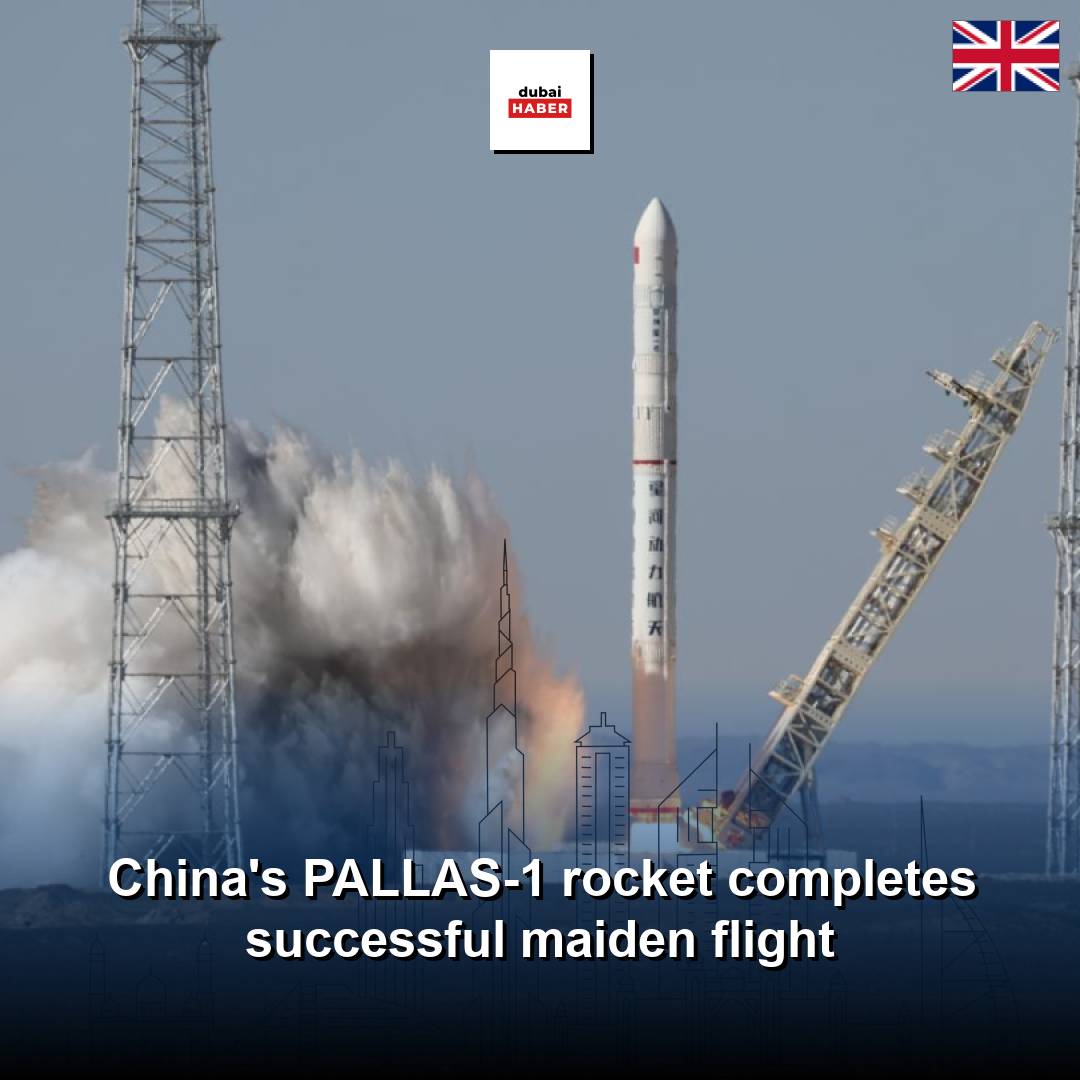
China's PALLAS-1 rocket completes successful maiden flight

BEIJING, 1st September, 2026 (WAM) -- China on Tuesday successfully launched the PALLAS-1 Y1 carrier rocket into space from the Dongfeng commercial space innovation pilot zone in northwest China.The rocket blasted off at 10:00 am (Beijing Time) and performed normally throughout the flight, sending its payload into the designated orbit. All test objectives were met, and the mission was a complete success.The mission marked the maiden flight of PALLAS-1, a medium-sized, two-stage liquid carrier rocket.

Read News
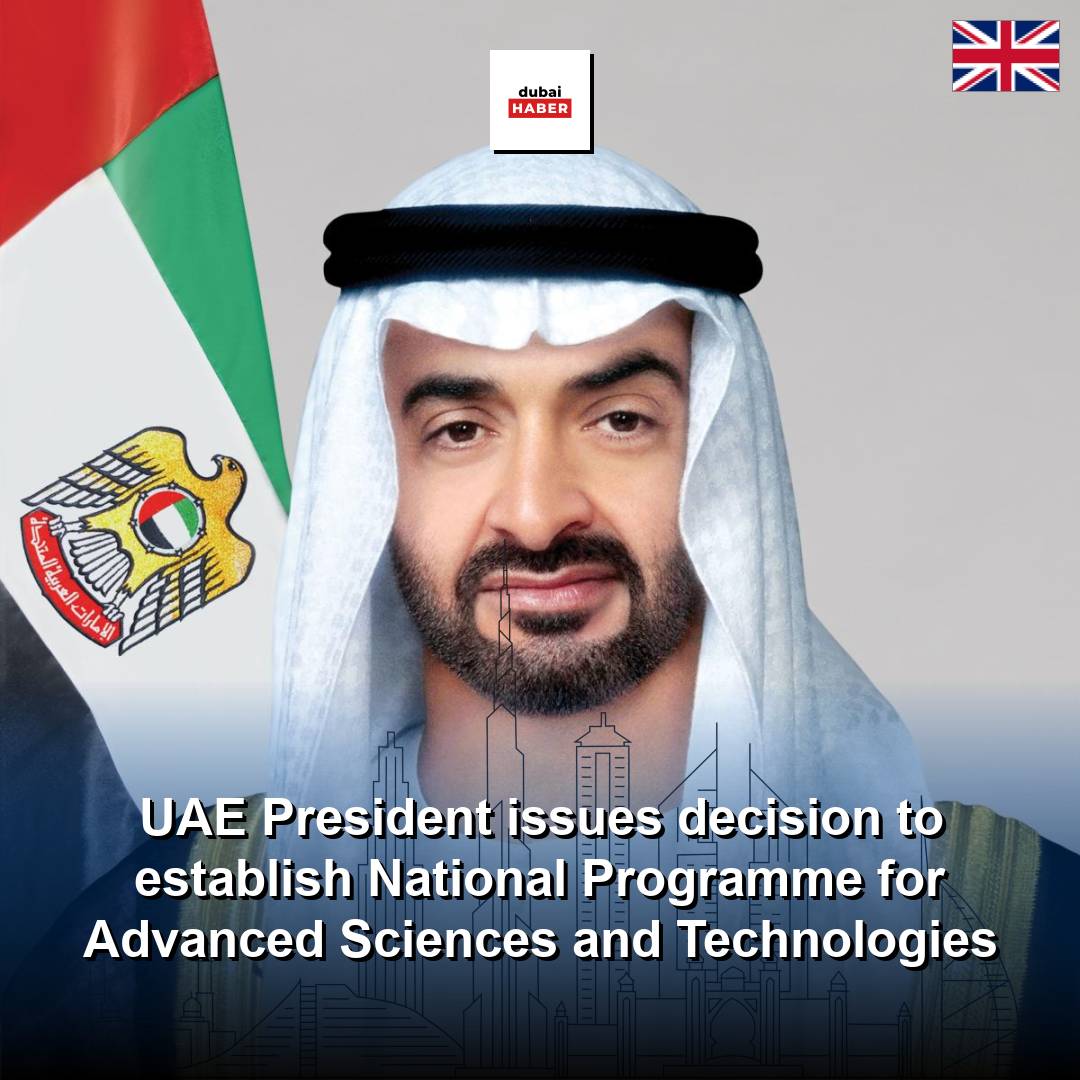
UAE President issues decision to establish National Programme for Advanced Sciences and Technologies
30.08.2026

UAE President issues decision to establish National Programme for Advanced Sciences and Technologies

ABU DHABI, 30th August, 2026 (WAM) – President His Highness Sheikh Mohamed bin Zayed Al Nahyan has issued a decision to establish the National Programme for Advanced Sciences and Technologies.The programme builds an integrated national pathway that links education, research and development, and talent-building with the UAE's strategic and advanced industries. It strengthens the country's readiness for the future through an institutional system that supports innovation, competitiveness, and national sovereignty in vital, priority sectors.The programme forms part of a broader national push to build an education and research system that keeps pace with rapid scientific and technological change, and to direct the outcomes of education, research, and development toward the fields that serve the state's needs and its industrial and development priorities. It focuses on investing in promising national talent, building a base of specialists in science and advanced technologies, and preparing them for future disciplines that strengthen the country's industrial capabilities and the competitiveness of Emirati products in strategic, priority sectors, while reinforcing national sovereignty within them.The decision establishes the Higher Committee for the National Programme for Advanced Sciences and Technologies, which will set strategic direction and provide overall oversight of the programme and its tracks. It is chaired by His Highness Sheikh Mansour bin Zayed Al Nahyan, Vice President, Deputy Prime Minister, and Chairman of the Presidential Court, with H.H. Sheikh Abdullah bin Zayed Al Nahyan, Deputy Prime Minister and Minister of Foreign Affairs, serving as Deputy Chairman. Its members include Mohammed bin Abdullah Al Gergawi, Minister of Cabinet Affairs, Managing Director and Chairman of the Executive Committee; Dr. Sultan bin Ahmed Al Jaber, Minister of Industry and Advanced Technology; Dr. Abdulrahman bin Abdulmannan Al Awar, Minister of Human Resources and Emiratisation and Acting Minister of Higher Education and Scientific Research; Mohammed bin Mubarak bin Fadel Al Mazrouei, Minister of State for Defense Affairs; Dr Ahmed Mubarak bin Nawi Al Mazrouei, Head of the Office of the UAE President for Strategic Affairs; and Faisal Abdulaziz Al Bannai, Advisor to the UAE President for Strategic Research and Advanced Technology Affairs.The Higher Committee approves the programme's key directions, priorities, policies, and initiatives. It sets the programme's budget in line with applicable legislation, issues the decisions and directives needed to support implementation, and tracks progress against the programme's objectives and national impact. It reports results and development recommendations to the UAE President and the Prime Minister to strengthen the programme's performance and long-term sustainability.The programme strengthens national industrial capabilities and the competitiveness of Emirati products in strategic and vital sectors by connecting research capabilities, educational institutions, and innovation centres to industrial priorities. This connection drives the development of technical solutions that can be manufactured, scaled, and exported, with a direct impact on the UAE's standing in science and advanced technology. The programme includes six key tracks in its first phase: Technical Education and National Talent, National Service, Flagship Initiative, Global Challenge, Global Talent Attraction, and Technical Research and Innovation. Additional tracks may be added as the programme develops and as the UAE President issues further directives.The decision also forms an Executive Committee for the programme, operating under the Higher Committee's supervision and chaired by Mohammed bin Abdullah Al Gergawi, Minister of Cabinet Affairs. The Executive Committee reviews and approves the plans, programmes, policies, and initiatives proposed for the programme and its tracks, then submits them to the Higher Committee for approval. It also reviews the programme's budget and that of its tracks, oversees implementation of approved items, and tracks progress across the tracks in coordination with the relevant entities across the state.The decision further establishes an office for the National Programme for Advanced Sciences and Technologies. The office coordinates with track leaders to prepare plans, programmes, policies, and initiatives, and ensures they remain integrated and consistent. It tracks implementation of approved initiatives and issues periodic reports on progress, delivery, and performance. The office also builds and manages relevant local and international partnerships, and provides administrative, technical, logistical, and organisational support across the programme's committees and tracks.

Read News
NASA, SpaceX adjust Crew-13 launch date
30.08.2026

NASA, SpaceX adjust Crew-13 launch date

WASHINGTON, 30th August, 2026 (WAM) -- NASA and SpaceX are adjusting the launch date for the agency’s Crew-13 mission to the International Space Station to address an oxidizer leak on Dragon’s propulsion system which was detected during standard prelaunch spacecraft processing.Joint NASA and SpaceX teams are performing additional tests and data review and will complete any necessary rework prior to launch. A new target date will be announced once available.NASA astronauts Jessica Watkins and Luke Delaney will serve as spacecraft commander and pilot, respectively. They will be joined by CSA (Canadian Space Agency) astronaut Joshua Kutryk and Roscosmos cosmonaut Sergey Teteryatnikov, who will serve as mission specialists.

Read News
Anthropic's new AI tool can conduct scientific experiments
29.08.2026

Anthropic's new AI tool can conduct scientific experiments

WASHINGTON, 29th August, 2026 (WAM) -- Anthropic has opened a research preview of a system that allows artificial intelligence (AI) assistants such as Claude to control scientific and engineering equipment and conduct experiments, marking the company’s first tool designed to operate in the physical world.Called the Model Hardware Standard (MHS), the technology enables AI agents to autonomously operate a wide range of devices that can be programmed using computer code. These include complex microscopes, liquid handlers, lasers and robotic arms.The research preview will initially be available to a first group of scientific research labs and advanced manufacturers, Anthropic said. The development comes as the Claude chatbot maker seeks to expand its enterprise business and boost revenues with new applications.Anthropic said AI agents can reason through individual steps in an experiment, change parameters in real time and, in some cases, recover from hardware errors without intervention. This could allow researchers and engineers to run autonomous experiments and workflows around the clock.The company said Claude can also interact with hardware in an exploratory manner, similar to how a scientist might approach an unfamiliar experimen.Anthropic said scientists have observed AI agents tracking, adjusting and repeating experiments in ways similar to human researchers. In one neuroscience experiment, an Anthropic scientist observed Claude examine live brain tissue and identify the alveus, a specific part of the brain, according to the Financial Times.Anthropic plans to open-source MHS, but said it will first work on safeguards to reduce the risk of errors when AI agents interact with physical equipment.The launch follows Anthropic’s introduction in June of Claude Science, its first product dedicated to scientists. The product includes applications such as rendering three-dimensional protein structures and assisting with drug discovery. MHS takes that push a step further by allowing AI agents to move from analysing scientific information and generating hypotheses to interacting with the physical equipment used to test them.

Read News
TDRA grants Starlink license to provide satellite internet services in UAE
28.08.2026

TDRA grants Starlink license to provide satellite internet services in UAE

ABU DHABI, 28th August, 2026 (WAM) -- The Telecommunications and Digital Government Regulatory Authority (TDRA) has granted Starlink Satellite Communications LLC a 10-year General Space Services License, authorising the company to establish, operate, and manage a public satellite communications network and provide broadband satellite internet services in the UAE.The license marks an important milestone in the UAE’s regulatory framework for satellite communications services. It adds a space-based layer to the country’s national digital infrastructure, complementing terrestrial fibre-optic and 5G networks. This will diversify internet access options, enhance the resilience, readiness, and continuity of the national network under various conditions, and support critical sectors including maritime and aviation transport, energy, logistics, and emergency response.From a regulatory perspective, the license reflects TDRA’s approach to adopting a flexible and forward-looking regulatory framework that embraces emerging technologies, expands user choice and connectivity solutions, and promotes competition. This is expected to contribute to service quality, customer experience, and continuity of telecommunications services, while reinforcing the UAE’s position as an attractive destination for global satellite system operators, in support of the objectives of the UAE Digital Agenda and “We the UAE 2031” vision.The scope of the license extends beyond individual consumers to include businesses and government entities, as well as satellite connectivity services for the maritime and aviation sectors, in accordance with the UAE’s approved regulatory and technical frameworks. This further enhances the license’s strategic and economic significance and broadens its impact across key productive sectors of the UAE.Majed Sultan Al Mesmar, Director-General of TDRA, said, ”This license represents a significant addition to the UAE’s telecommunications sector and reflects the country’s commitment to adopting advanced technologies and fostering a flexible regulatory environment that supports innovation and investment. The introduction of advanced satellite internet services will expand connectivity options, enhance network resilience and business continuity, and support the UAE’s ambition to strengthen its position as a regional and global hub for telecommunications and the digital economy.”He added,“TDRA is committed to ensuring that the introduction of emerging and new technologies delivers tangible benefits to customers, service quality, and sector competitiveness, while maintaining the highest standards of security, reliability, and consumer protection.”The license is expected to contribute to digital transformation, develop connectivity solutions for vital sectors and areas requiring additional connectivity options, and enhance the UAE’s readiness to respond to emergencies and crises, in line with the country’s national visions and strategies.The services covered by the license are subject to the UAE’s approved regulatory and technical frameworks, including requirements related to security and the protection of information infrastructure, service quality, reliability and continuity, consumer rights and data privacy, as well as compliance with spectrum-use regulations and technical coordination with relevant authorities.These requirements form an essential part of licensing decisions of this nature. TDRA’s regulatory approach seeks to balance enabling access to advanced technologies with ensuring that their deployment takes place within a robust framework that safeguards network security and consumer rights.

Read News