 TR
 EN
 AR
 RU
 ZH
 DE
 FR
 ES
 HI
 FA
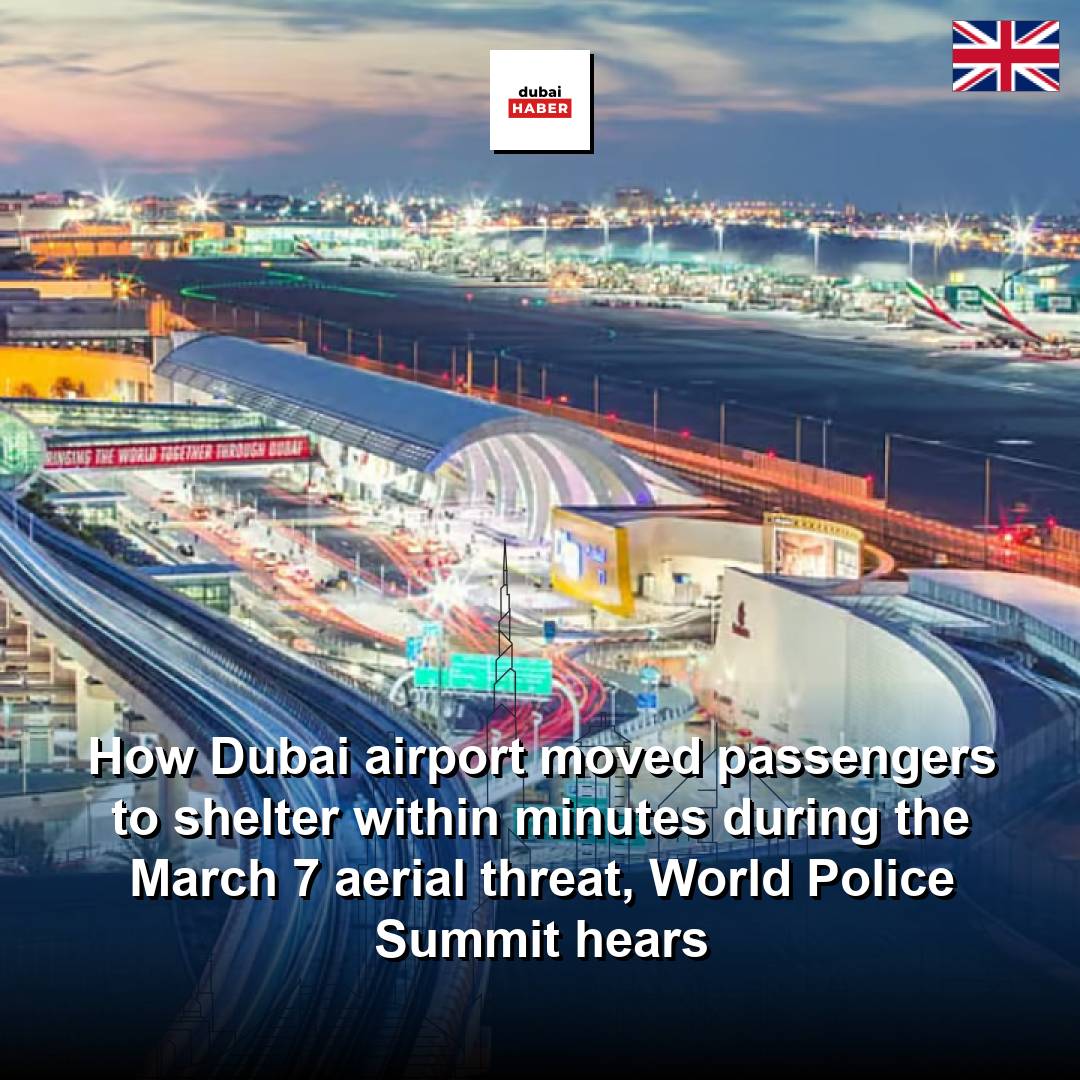
When an aerial threat disrupted airport operations in Dubai on March 7 this year, more than seven aircraft were in the air and running low on fuel, while five others were on the runway preparing to take off. Airport security teams faced an urgent challenge - protecting passengers as the situation unfolded.
More than eight months later, Brigadier Hussain Ahmad Buhussain Alfalasi, Assistant Director for Operations at the General Department of Airport Security, Dubai Police, recalled how they handled the crisis during a panel at the World Police Summit at Dubai World Trade Center on Monday, November 16.
He said coordination among airport teams, the armed forces, air traffic controllers, and other agencies helped them manage the situation without deaths or injuries. Protecting lives had been the priority, he stressed. Facilities could be repaired, but human lives could not be replaced.
Speaking during "Keeping the Arteries Open: Protecting Critical Infrastructure & Airspace Under Attack", Alfalasi said the crisis had required airport teams to develop shelter arrangements alongside existing evacuation plans.
He said dozens of shelter points were established. Direct communication with the armed forces and air traffic controllers allowed teams to act on warnings and move passengers and employees to shelter within six to seven minutes.
He also highlighted the airport's OneDXB system, which brought partners together under a unified leadership structure to support quick decisions. The experience reinforced the importance of jointly reviewing challenges, training future leaders, and ensuring information moved quickly between organisations, he said.
Brigadier General Staff Pilot AbdulNasser Al Humaidi, Official Spokesperson for the UAE Ministry of Defence, said effective cooperation during a crisis depended on work done long before it began.
He said military, police, security, and civilian institutions needed to train and operate together in advance. Expecting them to work efficiently for the first time during an emergency would be unrealistic. While the armed forces confronted aerial threats, other institutions worked behind them to support recovery and keep daily life moving.
Al Humaidi also described public communication as an essential part of the response. A lack of reliable information would create room for rumours, making timely updates and a consistent message across institutions particularly important. The aim was to reassure people while ensuring that information released publicly did not affect ongoing operations.
Talal Al Hammadi, Vice President of Air Traffic Development at Dubai Air Navigation Services, said protecting infrastructure also meant protecting the airspace connecting airports.
Decisions to restrict airspace had to account for aircraft already flying, including their altitude, alternative landing options and whether they could remain airborne while awaiting instructions. Those decisions depended on coordination with military and civil aviation authorities and the information available at the time, he said.
To prepare controllers for unfamiliar situations, DANS uses fast-time simulation to test scenarios in a controlled environment, followed by real-time simulation involving controllers. The exercises allow teams to identify mistakes and address them before facing similar situations during live operations.
Brigadier Dr Hesham Alsuwaidi, Deputy Director of Emergency Affairs at the General Department of Protective Security and Emergency, described how specialised crisis teams had helped speed up the response.
Teams were organied into cells linked to senior leadership, allowing specialists to exchange information and coordinate directly without moving through lengthy administrative chains. Personnel deployed across the emirate were trained to assess incidents, relay information and take responsibility in the field, while other teams worked to restore normal activity.
Alsuwaidi said the events earlier this year had also demonstrated the need for closer cooperation between police and the armed forces as the nature of threats changed.
Mohammed AlMheiri, Chief Business Officer for Public Safety and Security at Presight, said technology could support rapid decisions only if users trusted its information and understood its limits.
He said systems needed to be developed with operational teams, aligned with their procedures, and tested before a crisis. Commanders also needed to understand how data was managed, who could access it and the boundaries placed on automated tools. Without that confidence, decision-makers could lose time asking people to recheck information already displayed on their screens.
AlMheiri said AI should help people process information and act faster, with human involvement remaining part of the decision-making process.
(Source: Khaleej Times)